Aesthetics: Breaking the Myths and Trends
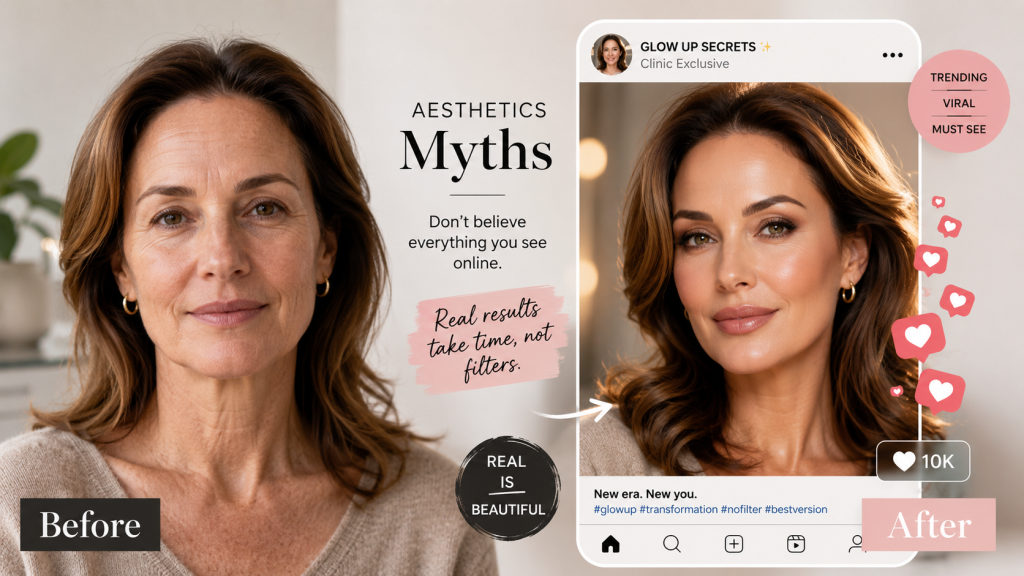
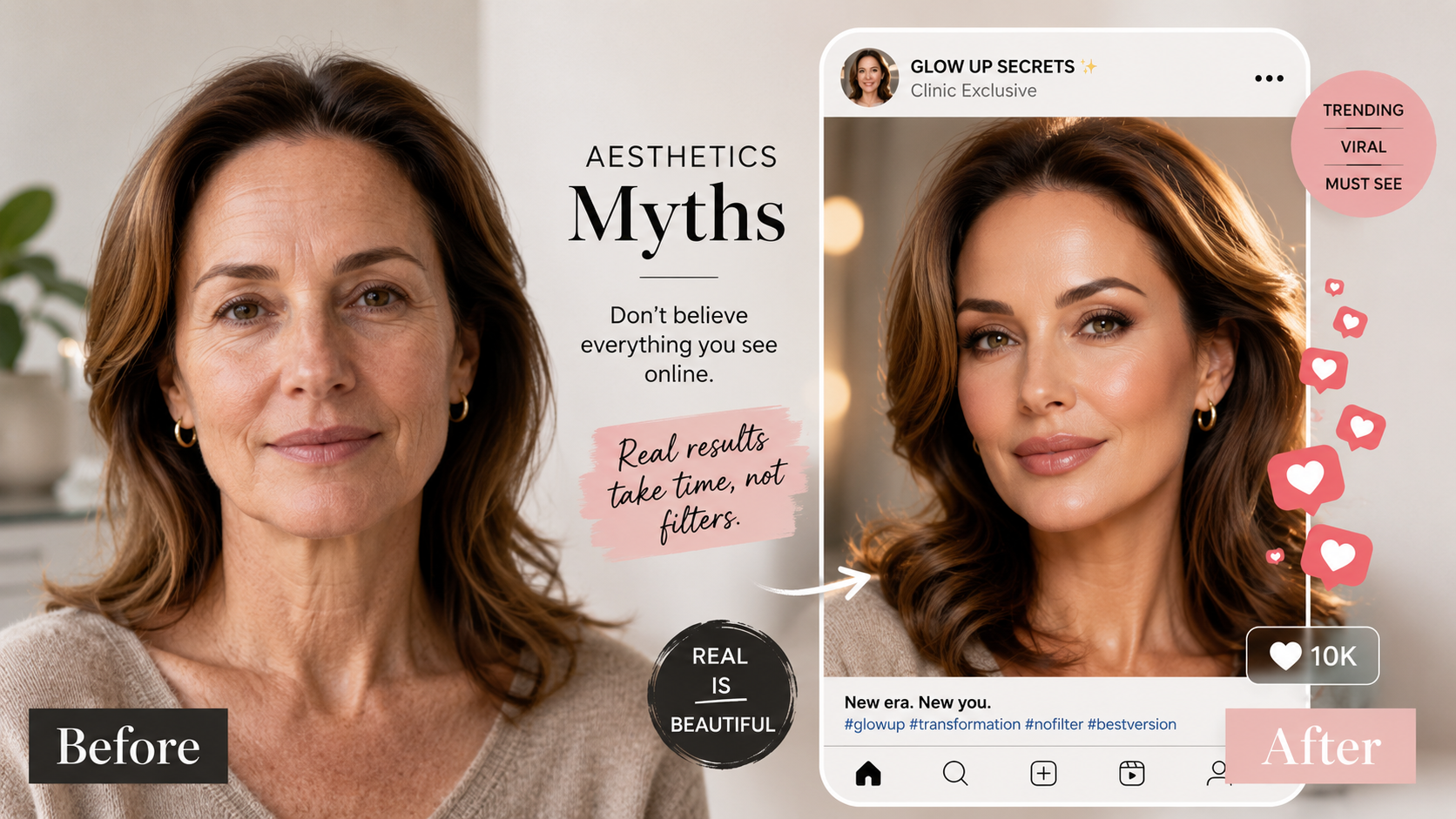
Social media has changed the way people learn about aesthetic treatments. TikTok and Instagram are full of before-and-after videos, dramatic transformations, trending procedures and bold claims about what a treatment can achieve.
Some of this content can be helpful, but it can also create unrealistic expectations.
A short video may make it look as though one treatment can completely transform someone’s face, tighten loose skin, remove every line or produce instant, permanent results. In reality, aesthetic treatments are much more individual than that.
The aim of good aesthetics should not be to follow every trend. It should be to choose treatments carefully, understand what they can realistically achieve and make decisions based on your own face, skin and concerns.
Myth 1: One Treatment Will Give an Instant, Dramatic Transformation
One of the biggest myths online is that a single treatment will completely change the way someone looks.
Social media often shows the most dramatic angle, the best lighting or the immediate result straight after treatment. What it may not show is swelling, make-up, filters, previous treatments or the full healing process.
Some treatments do give an immediate visible improvement, but many results develop gradually.
For example, skin treatments may require a course of appointments before the full benefit becomes noticeable. Collagen-stimulating treatments can take several weeks or months to develop. Certain treatments may improve one concern without completely correcting it.
A realistic result may be:
- softer lines rather than no lines at all;
- improved skin texture rather than completely flawless skin;
- gentle lifting rather than a surgical-style facelift;
- a fresher appearance rather than a completely different face.
Subtle results are not poor results. In many cases, they are the most natural and flattering results.
Myth 2: The Same Treatment Works for Everyone
A treatment that looks amazing on one person may not be the right choice for someone else.
Everyone has different:
- facial proportions;
- skin quality;
- muscle strength;
- bone structure;
- areas of volume loss;
- medical history;
- lifestyle;
- budget;
- expectations.
Two people may both be concerned about sagging around the lower face, but the cause may be completely different.
One person may benefit from improving lost volume, while another may need skin tightening, collagen stimulation or treatment of an overactive muscle. In some cases, a combination of treatments may be more appropriate. In others, treatment may not be recommended at all.
This is why copying a treatment seen on TikTok or Instagram is not always sensible. The treatment should fit the person, not the trend.
Why Social Media Results Can Be Misleading
Before-and-after images and treatment videos do not always tell the full story.
A dramatic result may be affected by:
- different lighting;
- different facial expressions;
- camera angles;
- make-up;
- image editing;
- filters;
- temporary swelling;
- several treatments being presented as one;
- results taken at different stages of healing.
Some content creators are also paid to promote treatments or products. This does not automatically mean the information is false, but it may not be completely balanced.
Very short videos rarely explain suitability, risks, healing time, limitations or what happens if the treatment does not produce the expected result.
Trending Does Not Always Mean Suitable
Aesthetic trends move quickly.
One month everyone may be talking about a particular lip shape, facial contouring technique or skin treatment. A few months later, attention moves to something new.
Your face should not have to change every time social media changes.
Trends can sometimes encourage people to focus on features they had never previously disliked. Constantly seeing edited images and dramatic transformations can make normal lines, facial movement, skin texture and natural asymmetry feel like problems.
A responsible consultation should never create new insecurities or pressure you into treatment.
The conversation should focus on what concerns you, what is realistically achievable and whether treatment is genuinely suitable.
More Treatment Is Not Always Better
Another common message online is that combining several treatments will automatically produce a better result.
Sometimes a carefully planned combination can be beneficial, but more treatment does not always mean a more attractive or natural result.
Overtreating an area can affect facial balance and movement. It can also increase cost, downtime and the possibility of unwanted effects.
It is often better to begin conservatively, allow the treatment to settle and review the result before deciding whether anything further is needed.
Aesthetic treatments should be a process, not a race.
What Good Aesthetic Treatment Should Look Like
Good aesthetic treatment should begin with an honest assessment.
This includes discussing:
- what is bothering you;
- what may be causing the concern;
- the treatments that may help;
- what the treatment cannot do;
- possible risks and side effects;
- expected downtime;
- how long results may last;
- whether several sessions may be needed;
- whether a different treatment may be more appropriate.
Sometimes the most professional advice is to wait, choose a smaller treatment or decide not to treat an area.
Realistic Expectations Lead to Better Results
No aesthetic treatment can stop ageing completely, permanently change your skin or guarantee perfection.
Treatments can, however, soften certain concerns, improve skin quality, restore balance and help someone feel fresher or more confident.
The best results are usually achieved when expectations are realistic from the beginning.
It is important to remember that:
- results vary from person to person;
- healing and response cannot be predicted perfectly;
- maintenance may be required;
- some concerns need more than one session;
- non-surgical treatments have limitations;
- natural facial movement and skin texture are normal.
My Approach at FaceTime
At FaceTime, I believe in honest, individual treatment planning.
I do not believe in recommending a treatment simply because it is trending online. I look at the person in front of me, listen to what they would like to improve and explain what may realistically be achieved.
My aim is not to make everyone look the same.
It is to create results that suit your own features, preserve your individuality and help you feel like a refreshed version of yourself.
Social media can provide inspiration, but it should not replace professional advice.
Before choosing any aesthetic treatment, take time to ask questions, understand the limitations and make sure the treatment is right for you—not simply popular online.
Good aesthetics should feel informed, considered and personal.